Ex aequo award to two centers: Vissum Miranza Alicante and Hospital San Rafael Madrid win the FacoElche+CSIC+2EyesVision Research Grant on halo measurement in intraocular lenses
The exceptionally high quality of the applications received has led the evaluation committee to grant the award ex aequo to two centers. Vissum Miranza Alicante and Hospital San Rafael Madrid will collaborate with the Instituto de Óptica of the CSIC and 2EyesVision on a multicenter clinical study for the systematic and comparable measurement of halos produced by presbyopia-correcting intraocular lenses.
A call of outstanding scientific quality
The FacoElche+CSIC+2EyesVision Research Grant received applications from centers with a strong clinical and research track record in lens surgery and presbyopia correction. Following a rigorous evaluation process by the committee, comprising representatives from the Instituto de Óptica of the CSIC, 2EyesVision and FacoElche, the grant has been awarded ex aequo to two candidates, given the outstanding quality of the proposals received and the scientific value of expanding the study to a multicenter design.
The award-winning centers
Vissum Miranza Alicante, with Mario Cantó Cerdán as principal investigator and the participation of Drs. Jorge L. Alió and Jorge Alió del Barrio, together with their clinical optometry team.
Hospital San Rafael Madrid, with Ángel Jiménez López as principal investigator and the participation of Dr. Mariano Royo, together with their clinical optometry team.
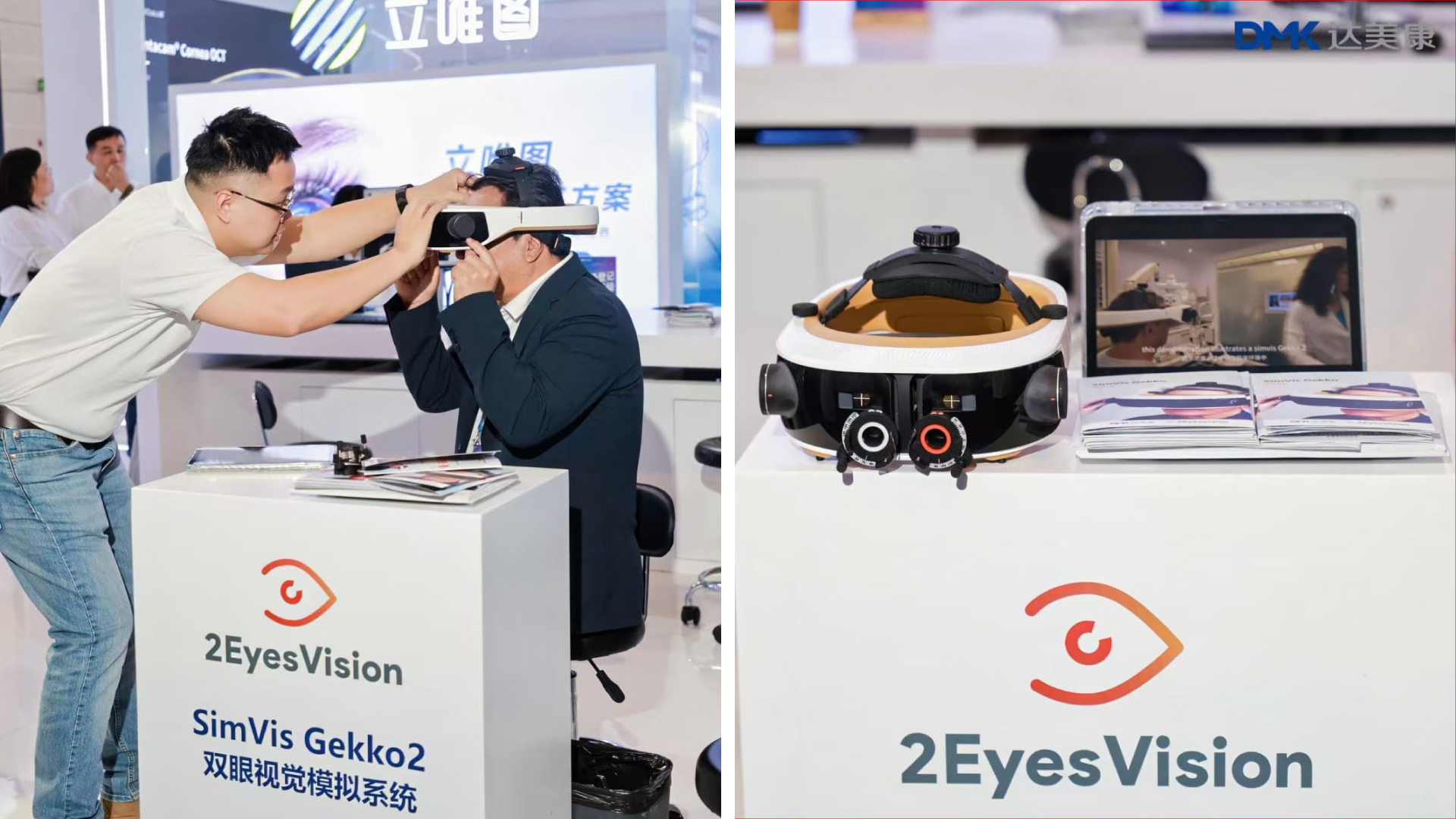
Each center will receive a SimVis Gekko visual simulator on loan for the duration of the study and will have the opportunity to present their results at leading scientific congresses.
The project: measuring halos in presbyopia-correcting IOLs
Both centers will participate in a study involving patients implanted with presbyopia-correcting IOLs, including multifocal and EDOF models. The objective is to study, in a systematic and comparable way, the halos produced by different IOL designs and to compare these clinical measurements with preoperative simulations performed with SimVis Gekko. This combined approach aims to bridge the gap between the halos experienced by patients after implantation and how these visual phenomena can be anticipated before surgery, contributing to a more consistent evaluation of visual quality across IOL designs.
The evaluation committee thanks all applicants for the quality and rigor of their proposals, which have made this first edition an outstanding scientific call.