

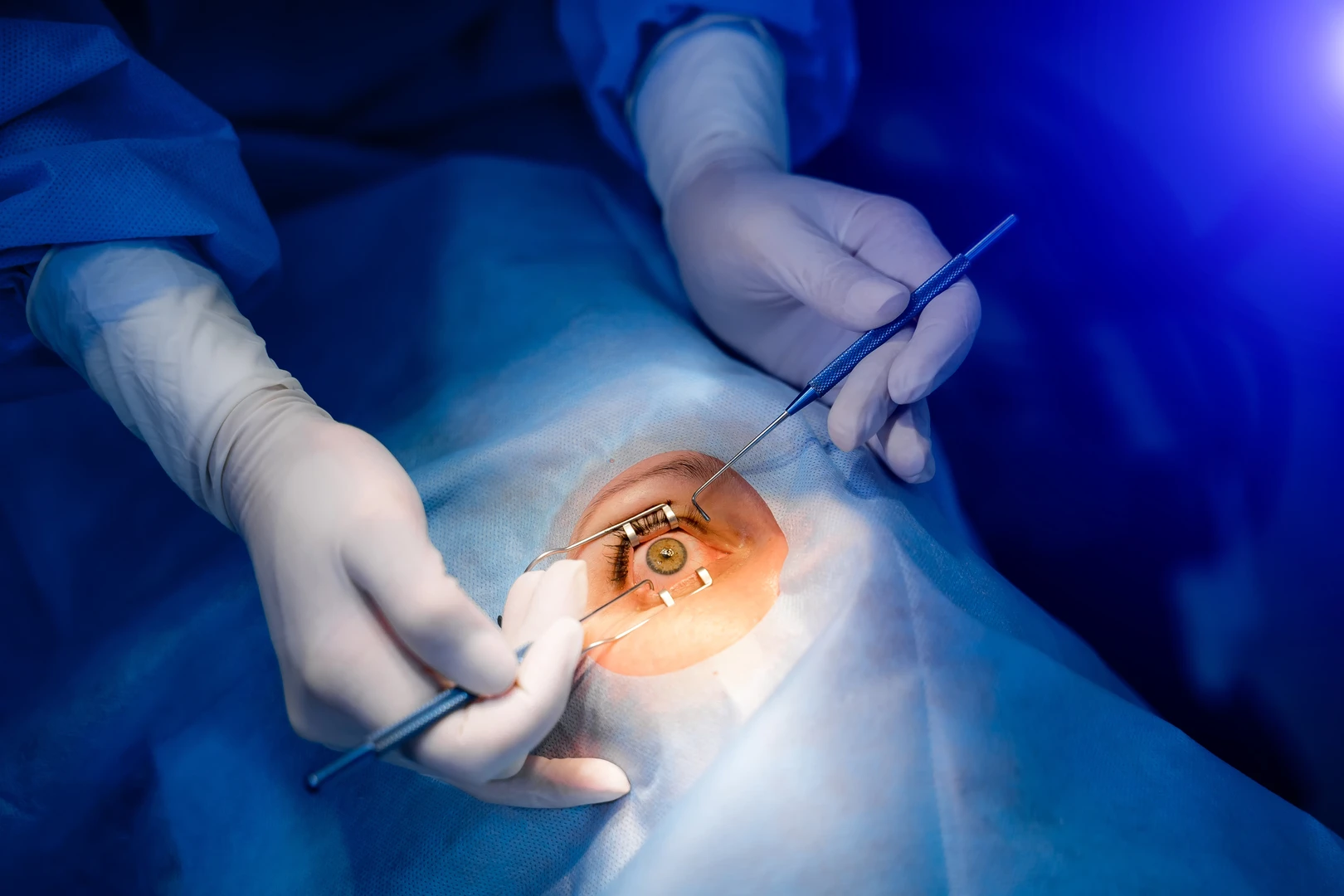
The role of pre-surgical vision simulation in premium IOL decision-making
Refractive cataract surgery has transformed patient expectations. While biometric precision continues to improve refractive predictability, dissatisfaction in premium intraocular lens (IOL) cases often stems from perceptual mismatch rather than refractive inaccuracy. Structured expectation alignment is emerging as a critical factor in improving patient satisfaction and strengthening premium IOL programs.
This whitepaper explores the optical, clinical and strategic rationale behind integrating vision simulation technologies into the preoperative workflow. It analyzes how experiential tools may complement traditional counseling, reduce decisional uncertainty and support structured shared decision-making in modern cataract practices.
1. The evolution of cataract surgery
Cataract surgery has shifted from vision restoration to refractive optimization.
Today’s patients expect:
-
Reduced spectacle dependence
-
High-quality night vision
-
Personalized visual performance
As presbyopia-correcting lenses become more common, the complexity of pre-surgical counseling increases.
Expectation management becomes central.
2. The dissatisfaction paradox in premium IOLs
Clinical literature indicates that dissatisfaction in multifocal and EDOF IOL cases is often associated with:
-
Halos
-
Contrast sensitivity perception
-
Unrealistic expectations
-
Inadequate counseling
Research published in leading ophthalmology journals highlights that expectation mismatch, rather than refractive error, is frequently the primary source of dissatisfaction.
Structured alignment reduces this risk.
3. Traditional counseling limitations
Traditional IOL counseling relies on:
-
Verbal explanation
-
Optical diagrams
-
Lifestyle discussion
However, optical concepts such as diffractive light splitting or depth-of-focus extension remain abstract for many patients.
Explanation alone may not fully translate into perceptual understanding.
4. Optical foundations of vision simulation
Vision simulation technologies are based on optical modeling principles that attempt to reproduce light distribution patterns associated with specific IOL designs.
These systems aim to:
-
Simulate depth-of-focus behavior
-
Demonstrate dysphotopsia patterns
-
Support experiential lens comparison
Simulation complements biometry by addressing perception rather than refractive prediction.
5. Clinical workflow integration
A structured integration model may include:
-
Biometric assessment
-
Lifestyle profiling
-
Pre-surgical vision simulation session
-
Lens selection confirmation
-
Surgical planning
Simulation becomes part of a standardized expectation management protocol.
6. Strategic implications for clinics
Integrating vision simulation may contribute to:
-
Increased premium IOL confidence
-
Reduced postoperative complaints
-
Improved patient trust
-
Differentiation in competitive markets
Clinics that prioritize expectation alignment strengthen long-term patient satisfaction and brand positioning.
7. The role of SimVis Gekko2
SimVis Gekko2 is a vision simulation device developed to reproduce optical behaviors associated with different IOL designs before implantation.
It aims to:
-
Enhance shared decision-making
-
Reduce decisional anxiety
-
Support premium lens programs
-
Complement clinical expertise
It does not replace surgical planning.
It enhances communication precision.
Conclusion
Modern refractive cataract surgery requires integration of optical science and structured communication. Vision simulation technologies represent an evolution in expectation alignment, supporting both patient confidence and clinical differentiation.
As premium IOL programs continue to expand, experiential counseling tools may play an increasingly relevant role in preoperative workflows.