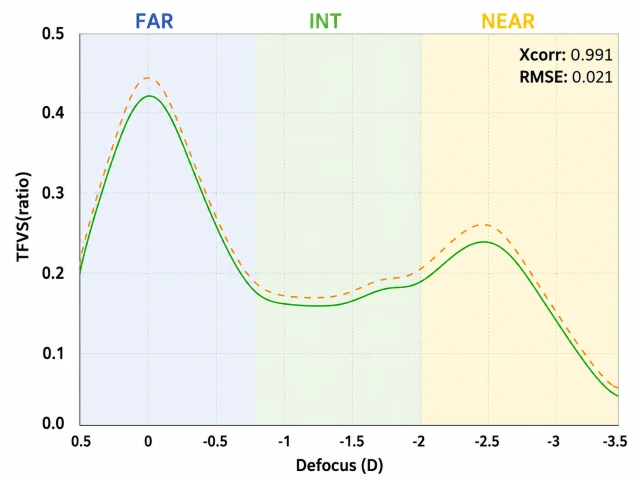
Validating preoperative visual simulation against real postoperative outcomes
Papadogiannis et al. compared simulated through-focus visual acuity curves obtained with SimVis Gekko against postoperative outcomes reported across published clinical studies.
1-min Author Commentary
◷ 1:34 min ▣ Ophthalmology Science
Papadogiannis, P., Barcala, X., Sisó-Fuertes, I., Zaytouny, A., Sawides, L., Dorronsoro, C., & Marcos, S. (2026). Predictions of through-focus performance of presbyopia-correcting intraocular lenses in presbyopic subjects using a visual simulator. Ophthalmology Science. Advance online publication.
Key findings
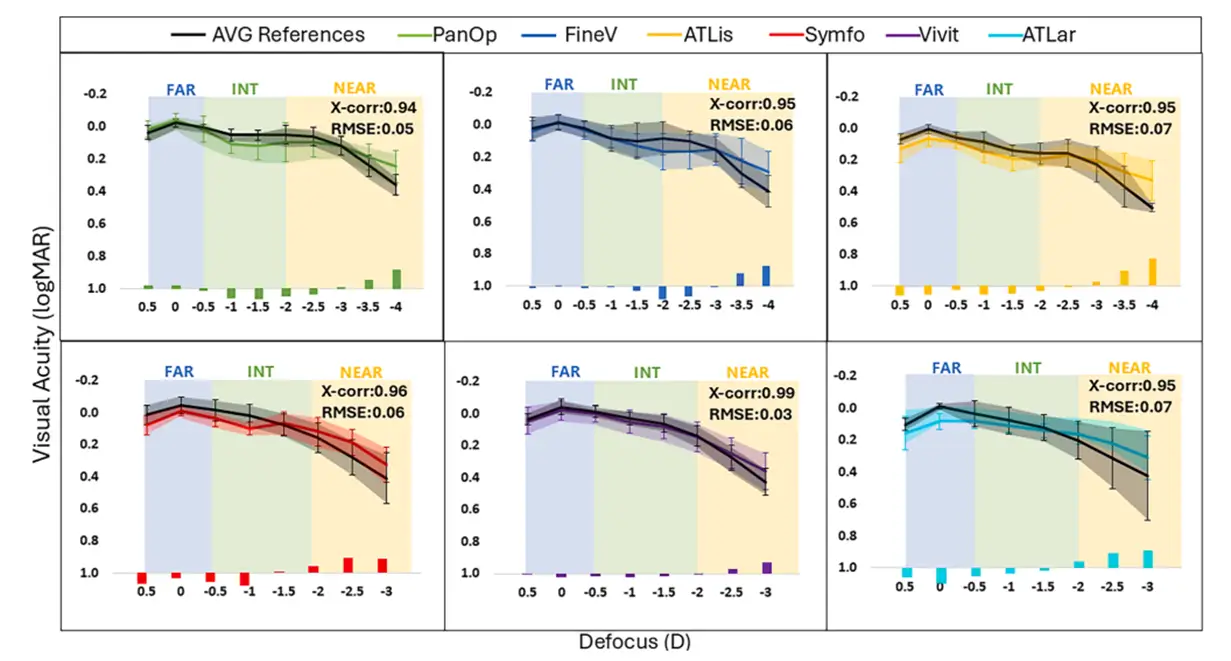
Strong agreement between simulated and clinical outcomes
Simulated defocus curves closely matched postoperative visual performance across all evaluated IOL designs.
Validation against large-scale clinical literature
The study benchmarked simulated outcomes against 33 published studies and hundreds of implanted patients.
Visual performance is patient-specific
Subjects responded differently to the same lens designs, reinforcing the importance of individualized preoperative assessment.
Why this matters clinically
The study suggests that differences between IOL designs are not only optical, but also perceptual and patient-specific. These findings may have important implications for:
Better expectation management
Help patients understand likely visual outcomes with greater clarity and realism.
More personalized IOL selection
Account for individual visual priorities and perceptual responses.
More informed preoperative conversations
Support shared decision-making with evidence-based visual simulation.