

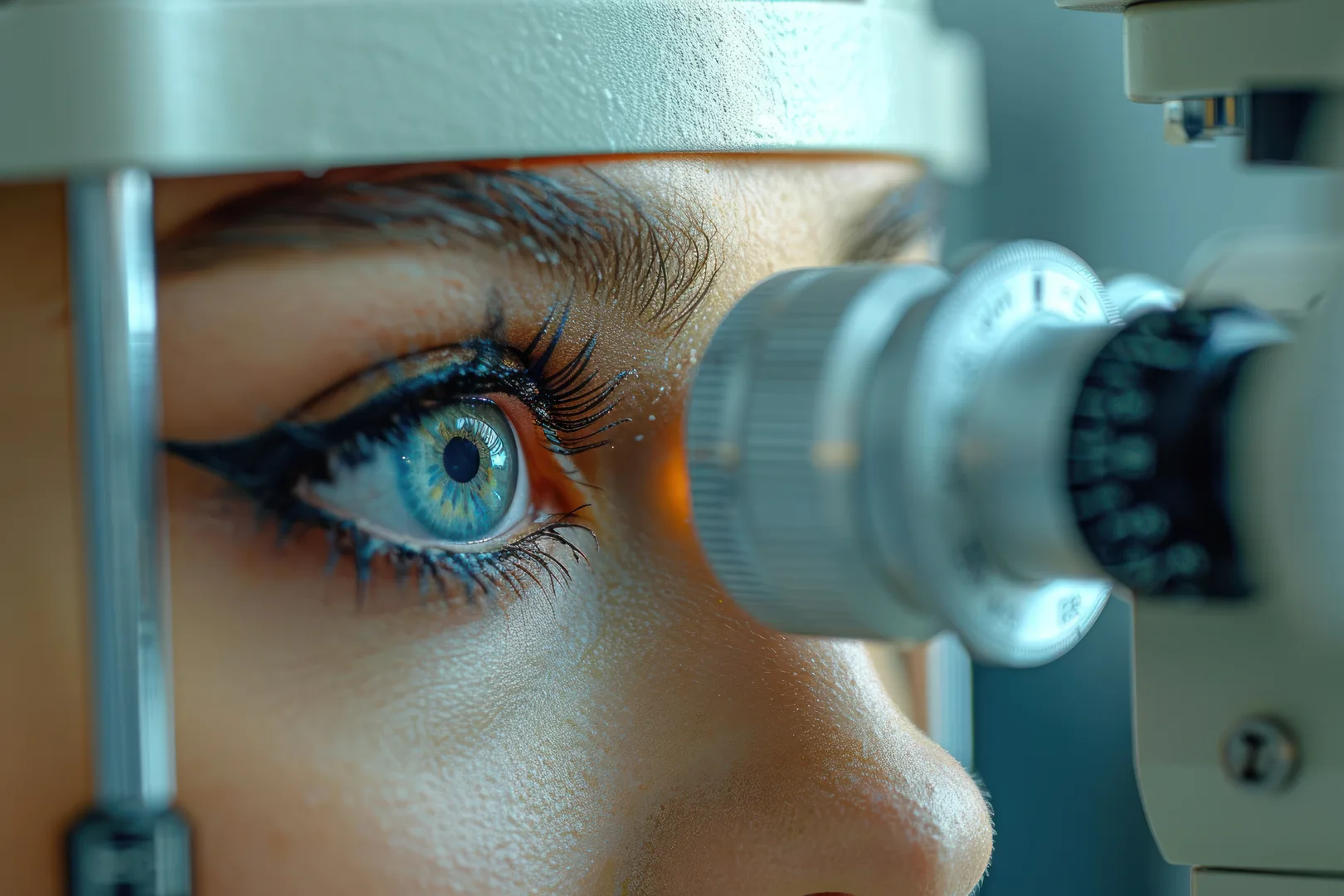
Clinical strategies to improve IOL selection, patient alignment and postoperative satisfaction using structured pre-surgical visual simulation tools
Cataract surgery has evolved into a refractive procedure where patient expectations are often as important as surgical precision. While biometric accuracy continues to improve, dissatisfaction after surgery is frequently linked to unmet visual expectations rather than refractive error alone. Surgeons face increasing pressure to reduce complaints related to halos, glare and contrast sensitivity, particularly in premium IOL cases. Pre-surgical visual simulation is emerging as a clinical support tool that allows ophthalmologists to demonstrate optical trade-offs before implantation, strengthening shared decision-making and improving alignment between predicted and perceived outcomes.
What is pre-surgical visual simulation?
Pre-surgical visual simulation refers to the use of optical technologies that allow patients to experience how different intraocular lens (IOL) profiles may affect their postoperative vision before surgery takes place. Unlike traditional counseling methods based on verbal explanation or diagrams, simulation systems attempt to reproduce depth of focus, light distribution patterns and dysphotopsia effects under controlled conditions. The objective is not to replace biometric calculation, but to complement refractive planning by addressing subjective perception.
As the American Academy of Ophthalmology highlights:
“Managing patient expectations is critical to achieving high levels of satisfaction in cataract surgery.”
Simulation therefore becomes a structured tool for expectation alignment rather than a marketing add-on.
The clinical challenge of expectation management
Premium IOL dissatisfaction often arises from:
- Night vision disturbances
- Perceived halos and glare
- Reduced contrast sensitivity
- Difficulty adapting to multifocal optics
According to research published in Ophthalmology, dissatisfaction is more frequently associated with expectation mismatch than with surgical complication.
Preoperative demonstration shifts the consultation from abstract explanation to experiential understanding.
Simulation as a complement to biometry
Biometry predicts refractive outcomes.
Simulation addresses perception.
This distinction is clinically relevant.
Simulation can help surgeons:
- Compare monofocal, multifocal and EDOF optical profiles
- Illustrate potential dysphotopsia patterns
- Support patients who are highly sensitive to night phenomena
- Strengthen confidence in premium positioning
Professor David F. Chang has emphasized:
“The most important factor in patient satisfaction is whether expectations are met.”
Pre-surgical demonstration enhances the probability of expectation alignment.
Integrating simulation into clinical workflow
Effective integration does not require disruption.
A structured model may include:
Step 1 – Biometric assessment
Standard IOL power calculation and ocular evaluation.
Step 2 – Lifestyle profiling
Night driving habits, digital use, reading distance preferences.
Step 3 – Visual simulation session
Controlled demonstration of different optical outcomes.
Step 4 – Shared decision confirmation
Lens selection supported by experiential understanding.
Clinics implementing structured pre-surgical counseling protocols often report improved patient confidence and reduced postoperative complaints.
Does simulation improve premium IOL conversion?
While conversion depends on multiple factors, experiential demonstration can reduce uncertainty and strengthen decision confidence in eligible candidates. Patients who understand optical trade-offs preoperatively are less likely to experience regret postoperatively.