

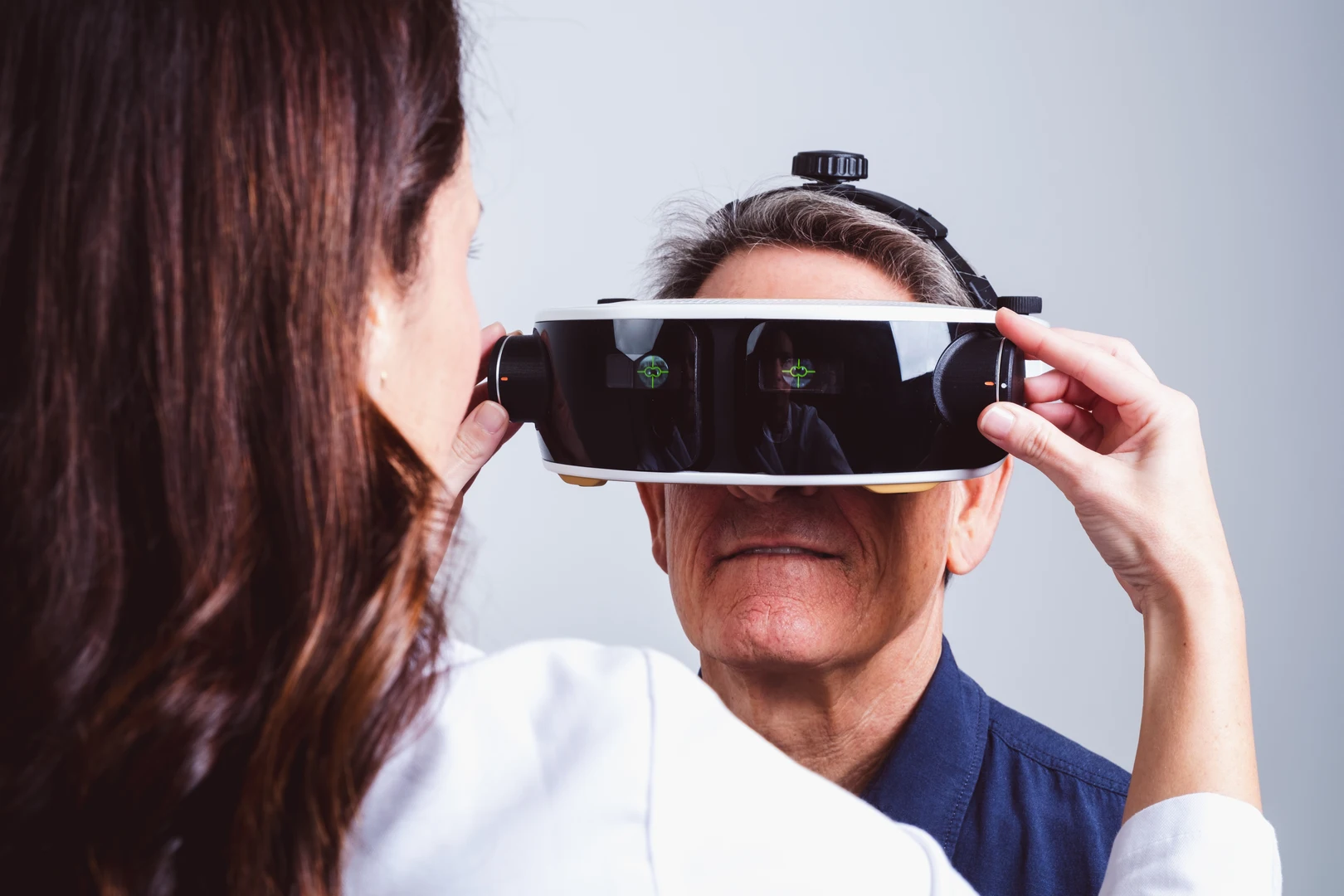
How modern optical technologies help patients and surgeons align expectations before intraocular lens implantation
Cataract surgery has evolved from a purely corrective procedure into a refractive intervention where visual quality, lifestyle performance and patient expectations define success. One of the most common concerns before surgery is uncertainty: How will I see afterward?
Modern vision simulation technologies are emerging as structured tools that allow patients and surgeons to explore potential visual outcomes before implantation. By reducing uncertainty and improving expectation alignment, simulation is becoming a key component of advanced refractive cataract care.
What is vision simulation before cataract surgery?
Vision simulation refers to optical technologies that allow patients to experience how different intraocular lens (IOL) designs may affect their postoperative vision prior to surgery.
Unlike traditional counseling based only on explanation, simulation attempts to recreate:
-
Depth-of-focus differences
-
Light distribution patterns
-
Halos and dysphotopsia phenomena
-
Contrast sensitivity variations
The objective is not to guarantee a precise postoperative result, but to provide experiential understanding of potential visual trade-offs.
As emphasized by the American Academy of Ophthalmology, expectation management is central to patient satisfaction in cataract surgery.
Simulation strengthens that process.
Why expectation alignment matters
Postoperative dissatisfaction in premium IOL cases is often linked not to surgical error, but to expectation mismatch.
Patients may expect:
-
Perfect vision at all distances
-
No night vision disturbances
-
Immediate adaptation
When reality differs from those expectations, dissatisfaction increases.
Structured pre-surgical counseling — supported by visual demonstration where available — significantly reduces this gap.
How vision simulation supports better decisions
Vision simulation contributes to:
-
More confident lens selection
-
Improved shared decision-making
-
Greater patient understanding
-
Reduced postoperative complaints
-
Enhanced premium IOL positioning
It complements biometric planning by addressing perception rather than refractive prediction alone.
Related topics
To explore this topic in depth, visit:
-
How to simulate vision before cataract surgery
-
Managing patient expectations in premium IOL cases
-
Monofocal vs multifocal vs EDOF lenses
-
Reducing halos and dysphotopsia after cataract surgery
-
Can I try a lens before cataract surgery?
-
What is the best intraocular lens for me?
(Internal links to each article)
Who can benefit from vision simulation?
Vision simulation is particularly valuable for:
-
Patients considering multifocal or EDOF lenses
-
Individuals highly sensitive to night vision quality
-
Surgeons seeking structured expectation protocols
-
Clinics focused on premium differentiation
As Professor David F. Chang has stated, meeting expectations is often more important than achieving optical perfection.
Simulation supports expectation clarity.
Frequently asked questions
Can simulation predict exactly how I will see?
No technology can perfectly predict subjective perception. However, simulation provides experiential insight that reduces uncertainty.
Is simulation only for premium lenses?
It is especially valuable in presbyopia-correcting IOL cases, but can support any patient who desires deeper understanding.
Does simulation replace surgical planning?
No. It complements biometric calculations and clinical evaluation.