

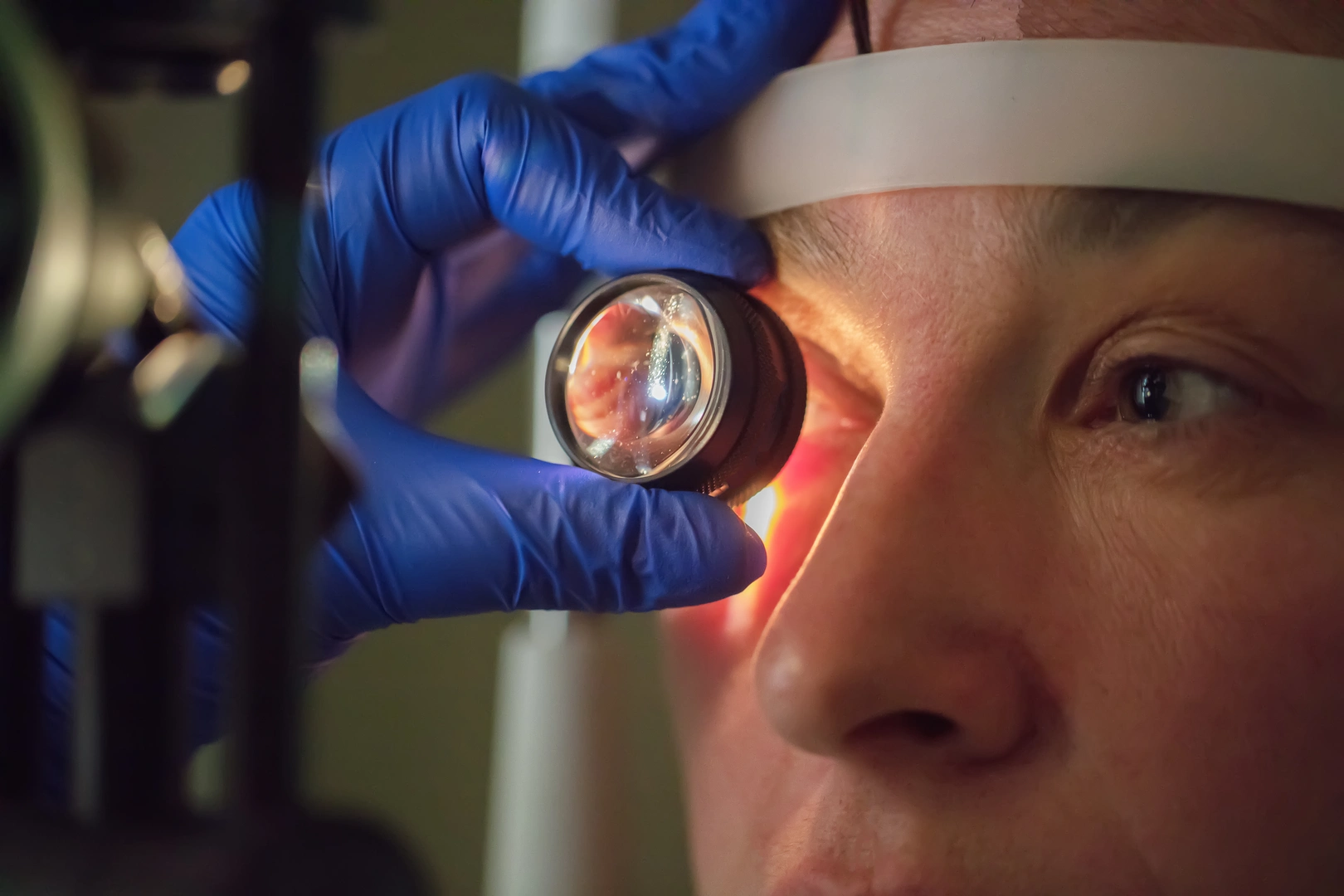
Clinical strategies to minimize postoperative complaints and improve patient adaptation in premium IOL cases
Halos and dysphotopsia remain among the most common causes of dissatisfaction after cataract surgery, particularly in patients receiving presbyopia-correcting intraocular lenses. While modern optical designs continue to evolve, visual phenomena related to light distribution are inherent to multifocal and some extended depth of focus (EDOF) technologies. Importantly, these effects are often not complications but expected optical trade-offs.
The challenge for surgeons lies not only in managing the phenomena themselves but also in preventing dissatisfaction through structured preoperative alignment and postoperative adaptation strategies.
What are halos and dysphotopsia after cataract surgery?
Dysphotopsia refers to unwanted visual phenomena perceived after intraocular lens implantation. These can include halos around lights, glare, starbursts, or shadows.
Halos are typically circular light artifacts visible around point light sources, especially at night. They are more frequently reported in multifocal and diffractive IOL designs due to the way light is split into multiple focal points.
Dysphotopsia can be classified as:
-
Positive dysphotopsia (bright artifacts such as halos or glare)
-
Negative dysphotopsia (dark shadows or peripheral arcs)
According to peer-reviewed studies in the Journal of Cataract & Refractive Surgery, most photic phenomena decrease over time as neuroadaptation occurs.
As the American Academy of Ophthalmology notes:
“Careful patient selection and counseling are key to minimizing dissatisfaction related to dysphotopsia.”
Understanding the mechanism is the first step toward management.
The physiology behind halos
Multifocal and diffractive IOLs redistribute incoming light to create multiple focal points. This redistribution enhances spectacle independence but can generate overlapping light patterns perceived as halos in low-light conditions.
Factors influencing perception include:
-
Pupil size
-
Ocular surface quality
-
Retinal sensitivity
-
Neural adaptation capacity
-
Patient personality traits
Halos are therefore not purely optical — they are neuro-optical.
Why dissatisfaction occurs
Halos become problematic when:
-
Patients were not adequately informed
-
Night driving is essential to their lifestyle
-
Expectations were unrealistic
-
Personality traits amplify perception
Professor David F. Chang has emphasized that expectation alignment remains the most powerful determinant of satisfaction in premium IOL surgery.
Surprise amplifies dissatisfaction.
Preparation reduces it.
Preoperative prevention strategies
Reducing postoperative complaints begins before surgery.
A structured approach may include:
Lifestyle screening
Identify frequent night drivers or visually demanding professions.
Optical trade-off explanation
Clarify that greater spectacle independence may introduce photic phenomena.
Visual simulation
Where available, demonstrate potential halo patterns before surgery.
Explicit expectation confirmation
Ask patients to describe what they understand about possible night vision effects.
When photic phenomena are anticipated, tolerance increases.
Postoperative management strategies
If halos are reported postoperatively:
-
Reassure patients about neuroadaptation
-
Optimize ocular surface health
-
Evaluate residual refractive error
-
Rule out posterior capsular opacification
-
Consider neuroadaptation counseling
Most cases improve over time.
Explantation is rarely required when expectations were properly set.
The role of visual simulation in reducing complaints
Pre-surgical visual simulation does not eliminate halos.
It reframes them.
By allowing patients to experience potential visual effects before implantation, simulation supports informed acceptance of optical trade-offs.
Expectation alignment transforms perceived complications into understood phenomena.
Strategic impact on premium IOL programs
Clinics implementing structured expectation protocols often report:
-
Lower complaint rates
-
Fewer regret-driven consultations
-
Higher premium lens confidence
-
Improved long-term satisfaction
Managing dysphotopsia is not only a clinical challenge — it is a communication strategy.